Water Damage Repair Services in Tampa, FL
Water damage repair services in Tampa make sense when water has soaked into walls, floors or ceilings, came from a dirty source, or covers more than a small spot. A quick spill on tile is often a DIY job. This page helps you decide, then call to be connected with a local provider.
- The Florida Department of Health advises cleaning up spills and drying wet building materials and carpets in the first 24 hours.
- Florida DOH says most experts suggest indoor humidity below 60%, and below 50% is ideal for limiting mold and dust mites.
- Many policies treat sudden damage differently from gradual leaks. Check your policy and document everything.
- Under Florida law, notice of a new property insurance claim must be given within 1 year after the date of loss.
- Florida DOH does not recommend mold testing or sampling to see if you have a mold problem.
When do you need water damage repair services in Tampa instead of DIY?
You likely need water damage repair services in Tampa when water has soaked into drywall, carpet pad, cabinets or subfloor, when the water came from a toilet, sewer line or flood, or when more than one room is wet. Small, clean spills on hard floors that dry out quickly are usually fine to handle yourself.
The hard part is what you cannot see. Water wicks up drywall, runs under baseboards and soaks into the pad below carpet. A floor can feel dry on top while the layer under it stays wet for days. A provider uses moisture meters to find that hidden water, so drying does not stop too soon.
What can a homeowner safely clean up without help?
A homeowner can usually handle a small amount of clean water on a hard surface, such as a sink overflow on tile or a short drip from a supply line that was caught fast. If you can wipe it up and dry the area with fans in a few hours, DIY is reasonable.
- Shut off the water at the fixture valve or the main shutoff.
- Turn off power to the area if water is near outlets or cords.
- Mop or wet-vac standing water and pull up wet rugs.
- Run fans and your AC to bring indoor humidity down.
- Take photos before and after, even for small spills.
If you need help finding the main shutoff, the burst pipe water damage page walks through the basics.
What signs mean the job is too big to handle yourself?
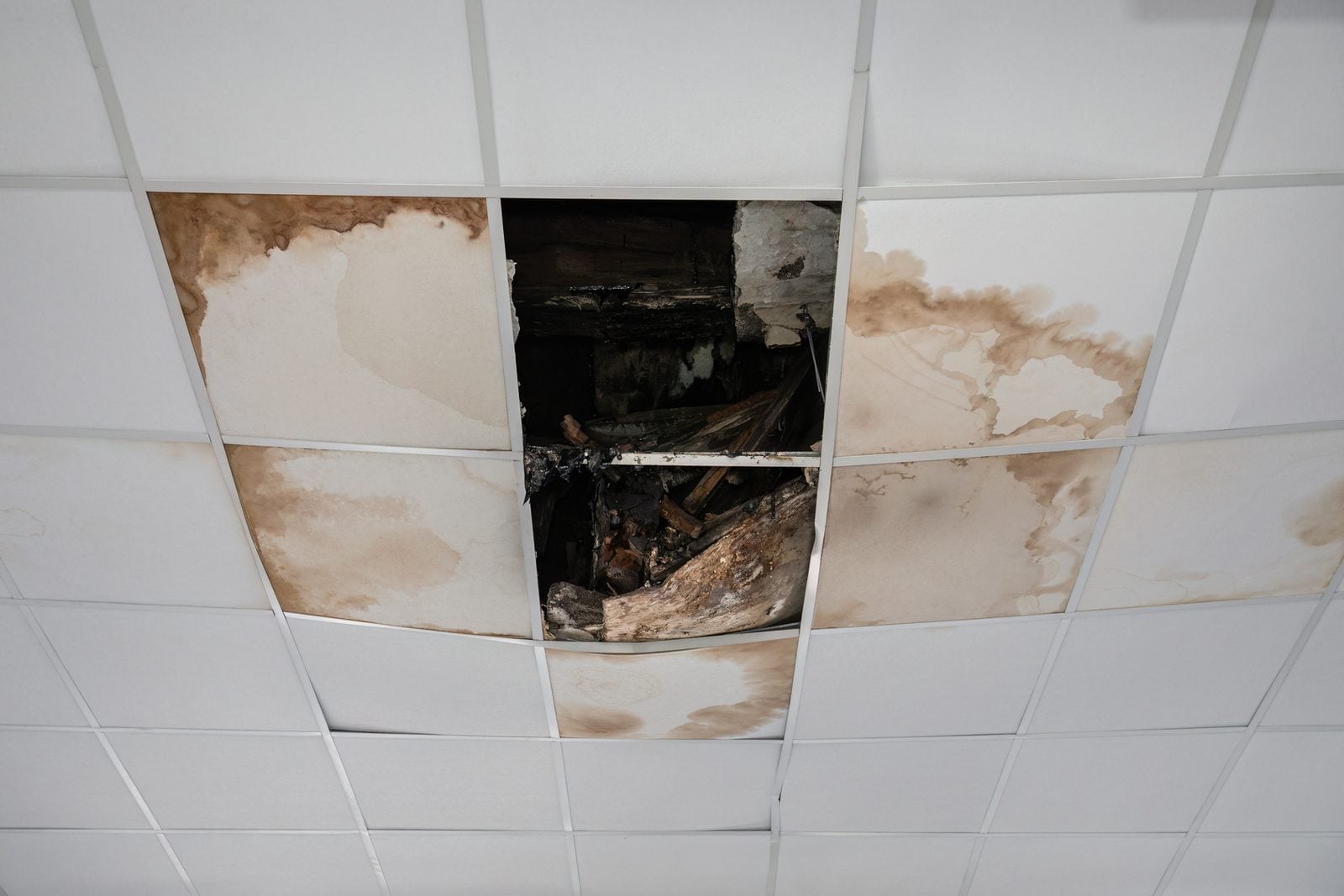
Call for help when water has been sitting for more than a day, when drywall feels soft or swollen, or when the ceiling is stained or sagging. These signs mean water reached materials that hold moisture and are hard to dry with box fans.
- Water came from a toilet, drain backup, outside flooding or storm surge.
- Carpet is soaked through to the pad.
- Baseboards, cabinets or wood floors are cupping or peeling.
- A musty smell shows up a few days after the leak.
- The leak came from a roof, AC drain line or the unit above you.
Dirty water is a different job. See sewage backup cleanup for why that kind of water is handled with more care.
Need help now? Call to be connected with a local provider in Tampa who can check availability for your address.
How does professional drying compare to box fans and a shop vac?
Professional drying uses commercial air movers, dehumidifiers and moisture meters to dry walls, floors and cabinets to a measured target. Box fans and a shop vac remove surface water and move air, but they do not pull much moisture out of the air or check what is still wet inside the wall.
In a humid place like Tampa, that difference matters. If the air stays damp, wet materials dry slowly. The Florida Department of Health says most experts suggest indoor humidity below 60%, and below 50% is ideal for controlling mold growth. A provider tracks readings each visit and adjusts the equipment until the numbers say the area is dry. Learn more on the structural drying page.
Should wet materials be dried in place or torn out and replaced?
It depends on what got wet, how long it stayed wet and how clean the water was. Clean water caught early can often be dried in place. Drywall, insulation and carpet pad touched by dirty water, or wet for a long time, usually need to come out.
Common examples:
- Tile and concrete: usually dried and cleaned.
- Drywall: may be dried if the water was clean and the board is still firm.
- Carpet pad: often replaced, since it holds water like a sponge.
- Cabinets and wood floors: sometimes saved, sometimes not, based on swelling.
The dry and restore vs replace page goes deeper on this choice.
What happens during the visit?
During the visit, a local provider inspects the damage, explains your options and gives you a written quote before any work starts. You decide what happens next.
- Inspection: the provider finds the source, checks walls, floors and ceilings with moisture meters, and maps how far the water spread.
- Options explained: you hear what can be dried in place, what may need removal and why, in plain words.
- Written quote: you get the scope in writing before work begins, which also helps when you talk to your insurance company.
- Documentation: photos and moisture readings can be shared for your records.
How long drying takes depends on the materials, the amount of water and the weather, so ask the provider to explain what they see in your home.
How should you handle insurance before choosing a provider?
Report the loss to your insurance company, take clear photos and keep notes. Many policies treat sudden damage, like a burst pipe, differently from gradual leaks or outside flooding, so check your policy and document everything.
The Florida Department of Financial Services says flood damage is not covered by a homeowners policy, and some policies do not cover sewer backup unless an endorsement was added. Florida law says notice of a new property insurance claim must be given within 1 year after the date of loss. This is general information, not legal advice. For more on the claim process, see our guide to water damage insurance claim basics.
Water damage risks for Tampa homes and nearby areas
Tampa homes see water from storms, plumbing and AC systems through much of the year. NWS Tampa Bay defines the rainy season for West Central Florida as May 25 to October 10, and the official Atlantic hurricane season runs from June 1 to November 30. Heavy rain and damaging winds are common from late May through June.
Hard water can play a part in plumbing wear. The City of Tampa says its drinking water ranges in hardness from about 140 to 300 parts per million, and its 2025 Water Quality Report lists an average of 211 mg/L, or 12.3 grains per gallon. The city also says a home's private shutoff valve is typically on the side of the home, in line with the meter box and low to the ground. It is worth finding yours before you need it.
Calls come in from Tampa, Brandon, Riverview, Temple Terrace and Wesley Chapel. Call to be connected with a local provider who can check availability for your address.
Related pages
Questions people ask
Do I really need water damage repair services for a small leak in my Tampa house?
Not always. A small, clean spill on tile that dries out quickly is usually a DIY job, but water that soaked into drywall, carpet pad or cabinets in a Tampa home is worth having checked with moisture meters.
How do I know if water got inside my walls after a leak?
Look for soft or swollen drywall, peeling paint, bubbling, or baseboards pulling away. A moisture meter is the most reliable way to check, and a local water damage provider in Tampa can take readings behind the surface.
Can I dry out wet carpet myself with fans?
Sometimes, if the water was clean and only the top was damp. If the carpet is soaked through to the pad, fans alone often leave the pad and subfloor wet, which can lead to odor and mold.
Is it safe to stay in my house while it dries out?
Often, yes, if the water was clean and the power is safe. If the water came from a sewer backup or flooding, or if the ceiling is sagging, keep people and pets out of that area until it is checked.
What is the difference between water damage repair and water damage restoration?
The terms overlap. Restoration usually means drying and cleaning, while repair often refers to rebuilding drywall, flooring or cabinets afterward. Many Tampa providers can explain both steps during the first visit.
How fast should wet drywall be dried?
As soon as possible. The Florida Department of Health advises drying wet building materials and carpets in the first 24 hours to help limit mold growth.
Why does my house smell musty a few days after a leak?
A musty smell usually means something is still wet. Hidden moisture under flooring or inside walls can feed mold growth, so it is a good time to call and have the area checked.
Can a dehumidifier from the hardware store fix water damage?
A small dehumidifier helps with light dampness but rarely keeps up after a real leak. Professional units pull far more water from the air and are paired with air movers to dry walls and floors.
What indoor humidity should I aim for after water damage in Florida?
Aim for below 60%. The Florida Department of Health says most experts suggest indoor humidity below 60%, and below 50% is ideal for controlling mold and dust mites.
Should I call my insurance company or a water damage provider first?
Either order can work, but do not wait to stop the water. Make it safe, take photos, report the loss to your insurer, and call to be connected with a local provider in Tampa.
Does homeowners insurance cover water damage from a flood in Tampa?
Usually not. Florida DFS says flood damage is not covered by a homeowners policy, and FEMA says an NFIP flood policy typically has a 30-day waiting period. Check your own policy.
Does homeowners insurance cover a sewer backup in Florida?
It may not. Florida DFS says some homeowners policies exclude water that backs up from an outside sewer or drain, though that coverage may be added by endorsement.
How long do I have to file a water damage claim in Florida?
Under Florida law, notice of a new property insurance claim must be given within 1 year after the date of loss. A supplemental claim must be noticed within 18 months. This is general information, not legal advice.
Will one water damage claim get my Florida policy canceled?
Florida DFS says a single water-damage claim may not be the sole reason an insurer cancels a property policy, unless the insurer shows you failed to take reasonable steps it requested to prevent a similar loss.
Do I need to test for mold after a leak?
Usually not. The Florida Department of Health does not recommend mold testing or sampling to see if you have a mold problem. Focus on finding and fixing the moisture source.
Can I remove mold myself in my own Tampa home?
Florida law exempts a residential property owner who does mold remediation on their own property from the state licensing rules. Licensing for hired mold work applies to more than 10 square feet of mold growth.
How do I check if a mold remediator is licensed in Florida?
Use the DBPR Verify a License search. DBPR licenses individual mold assessors and remediators, not businesses, so ask for the name of the person doing the work.
Where is the water shutoff valve on a Tampa house?
The City of Tampa says a home's private shutoff valve is typically on the side of the home, in line with the meter box and low to the ground. Find it before you need it.
Can I turn off my water at the curb in Tampa?
No. The City of Tampa says the curb stop is City property, and city code prohibits anyone other than an authorized City representative from turning water off or on there. Use your private shutoff valve instead.
What should I do if water is near outlets or my electrical panel?
Stay out of the water and do not touch outlets or cords. Turn off power at the breaker only if you can reach it from a dry spot. If not, call your power company for help.
What questions should I ask before hiring a water damage provider in Tampa?
Ask what they found, what can be dried in place, what needs removal and why, and ask for the scope in a written quote before work starts. Ask how they will measure that the area is dry.
Talk to someone about your water damage problem
Call to be connected with a local provider who can check availability for your address and explain the next step.